A Note Before We Begin
Let me be absolutely clear: this piece is not about blaming victims. The tragedy at the Swiss ski resort was devastating, and the people caught in that horror faced an unimaginable situation. What I want to explore is something more subtle and universal, how our environment shapes our threat perception in ways we don't consciously recognize, and what that means for how we make investment decisions.
The Fire We Didn't See Coming
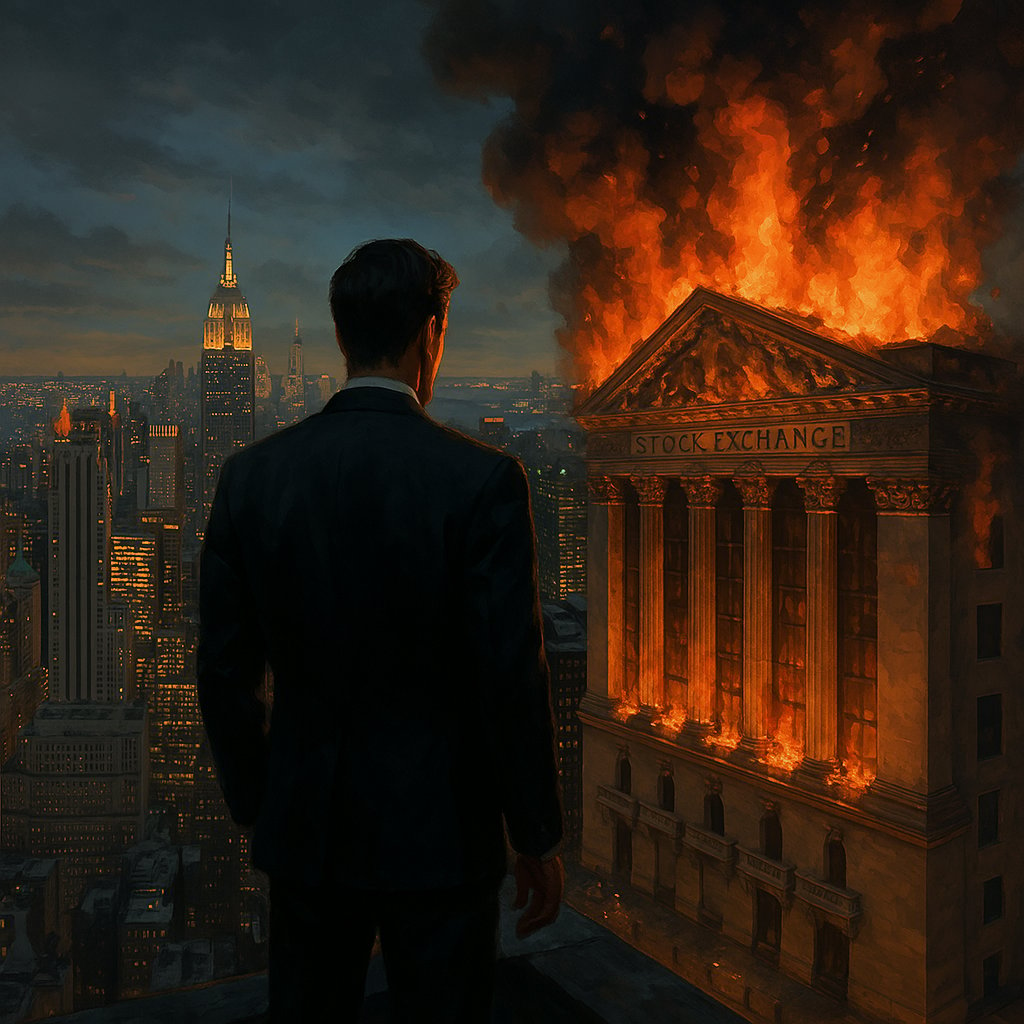
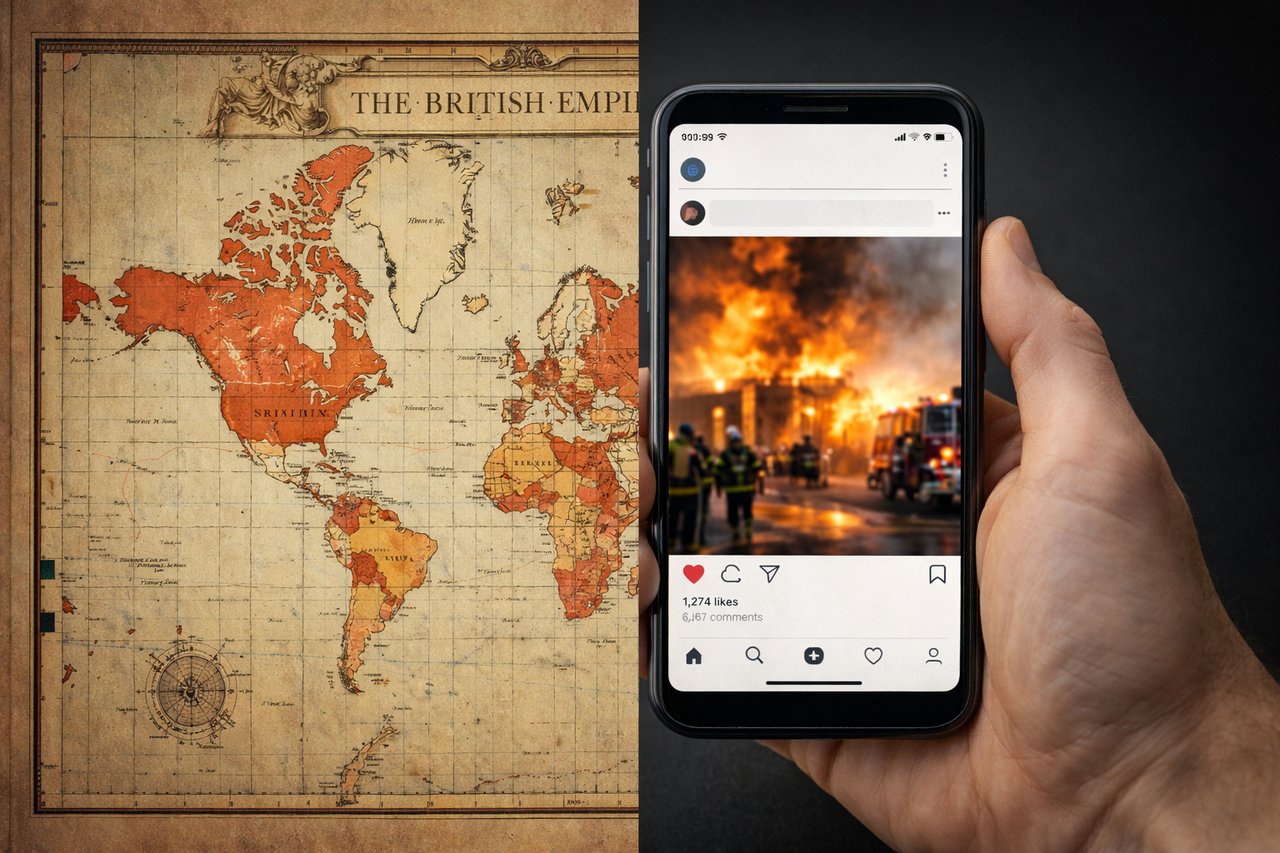
There's footage from the recent ski resort fire in Switzerland that's haunting for reasons beyond the obvious tragedy. In multiple videos, you can see people standing in proximity to rapidly spreading flames, filming. Not running. Not evacuating. Filming.
These weren't stupid people. They weren't reckless. They were operating on pattern recognition built from thousands of prior experiences where dramatic events witnessed through devices were spectacles, not immediate threats to their survival.
For tens of thousands of years, humans survived because we had reliable threat-detection systems. See fire, run from fire. Simple. Effective. It kept us alive long enough to become the dominant species on the planet.
But something has shifted. Our learned patterns, shaped by years of experiencing the world through screens, where we safely observe dramatic events from New York to Ukraine to natural disasters, are now overriding older, sometimes wiser instincts. We're essentially beta-testing new cognitive firmware in real-time, and the bugs in the system can be fatal.
What made humans apex survivors wasn't just instinct, it was our ability to override instinct with learning. But now that same capability has created a new vulnerability: our recent experience, no matter how brief in evolutionary terms, can override survival programming that took millennia to develop.
The Patterns We Thought Were Dead
Now let's talk about something that seems completely unrelated but reveals the exact same cognitive trap: the situation unfolding in Venezuela.
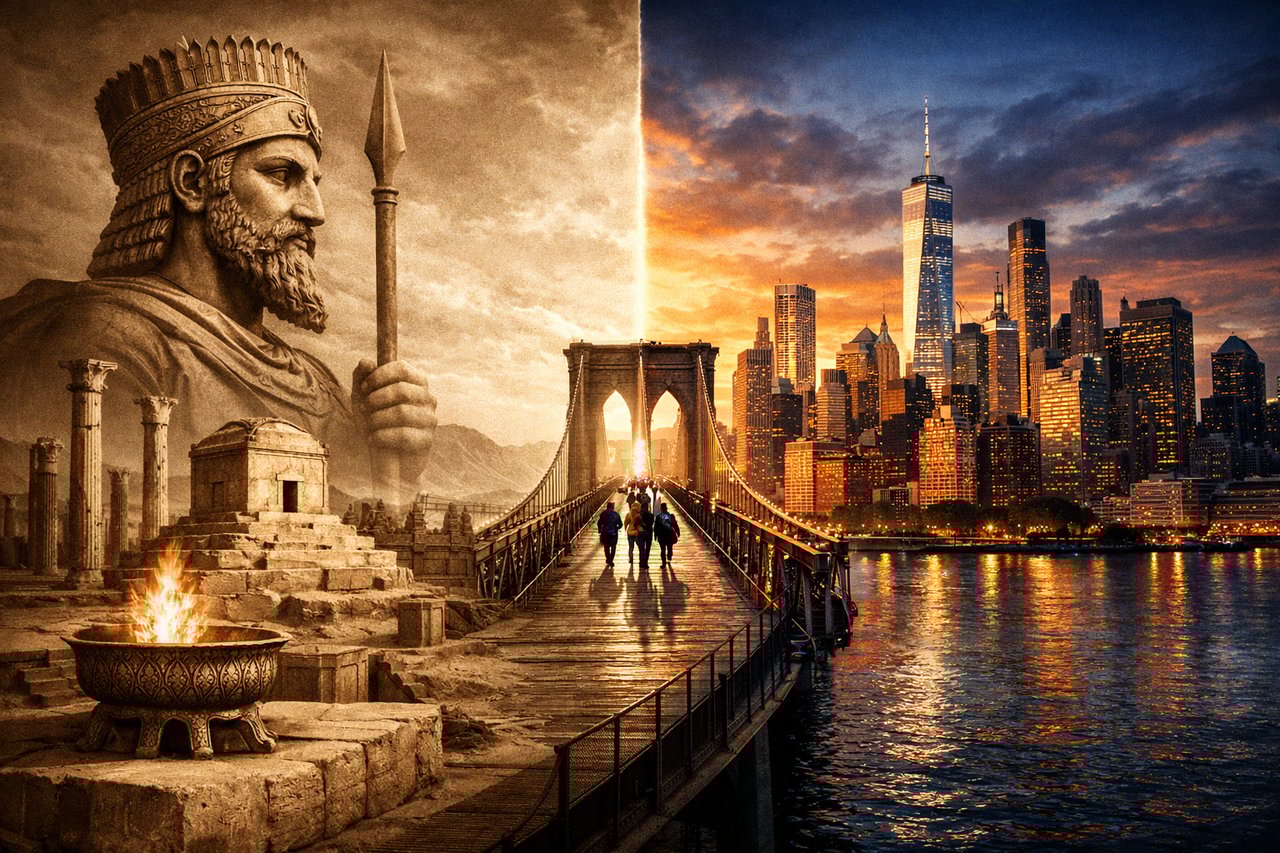
For thirty years, we've operated in what some called a "post-history" investment paradigm. Globalization was inevitable. Supply chains were stable. Geopolitics was manageable. Corporations operated within boundaries set by international norms and institutions. ESG considerations mattered. The rules-based international order would persist.
We learned new patterns and built investment theses on them.
Then Venezuela happens. Whether you view recent events as liberation or imperialism depends on your politics, but one thing is undeniable: the old playbook never got thrown away. Resource competition, sphere-of-influence politics, corporate-state power projection, the willingness of major powers to simply take what they want, none of it evolved away. It was just running in the background, dormant.
Like fire, these patterns were never actually gone. We just stopped seeing them as threats because our recent experience told us they were relics of history.
Investors who built entire theses on "the new normal" are now facing "the old abnormal."
The Investment Trap: Recent Patterns Override Everything
Both situations, the fire and Venezuela, reveal the same fundamental vulnerability: we trust our pattern recognition too much, especially when those patterns are recent and comfortable.
In investing, this manifests as:
- Recency bias: the last 10 years predict the next 10
- Survivorship bias: we study winners, not the landscape of failures
- Confirmation bias: we seek data that confirms our existing positions
And nowhere in investing is this more dangerous than in real estate.
Real Estate: Where Pattern Recognition Goes to Die
Real estate is particularly vulnerable to these cognitive traps because:
Long holding periods create false pattern confidence. If you've owned property through 2010-2023, you experienced mostly one direction. Your "pattern" says real estate appreciates, rates stay low, and there's always a bid. That's filming the fire.
Geopolitical risk re-emergence. Properties in "stable" jurisdictions suddenly face questions about capital controls, resource nationalism, infrastructure vulnerability tied to great-power competition. The old rules, location, location, location based purely on local economics, miss the re-emerging patterns of geopolitical risk.
The cap rate awakening. A generation of investors who never had to care about actual cash flow yields because appreciation bailed them out are now rediscovering that real estate is, fundamentally, a bond with a property attached.
Let me show you what filming the fire looks like in real estate:
Example 1: Miami Luxury Condos
The Recent Pattern (2020-2023): Crypto wealth, no state income tax, post-COVID migration, Latin American capital flight. Buy anything, it'll appreciate.
The Fire Being Filmed:
- Property insurance costs tripling due to climate risk
- Condo association fees spiking 40-60% as buildings require structural repairs post-Surfside
- Oversupply: Miami has more luxury condos under construction than any major U.S. city
- The crypto wealth that drove initial demand already evaporated in 2022
Who's Filming: Investors paying $1,200/sq ft in 2023 based on 2021 comps, assuming appreciation continues.
What an Advisor Would Ask: "At current insurance and HOA costs, what's your actual cash-on-cash return? What's your exit strategy if we're oversupplied in 2026?"
Example 2: Office Space in Major Cities
The Recent Pattern (Pre-2020): Class A office in CBD locations is bulletproof. Companies always need space, workers come to offices, institutional buyers provide liquidity.
The Fire Nobody Wanted to See:
- Blackstone stopped redemptions on its $69 billion real estate fund in 2022-2023
- Office buildings in San Francisco selling at 70-80% discounts to 2019 prices
- Pimco walking away from a $1.7 billion office tower in Los Angeles rather than refinancing
- Major cities facing 30-40% structural vacancy rates
Who's Filming: Investors who kept buying office REITs in 2021-2022, trusting the narrative that "we'll return to office" while ignoring the structural shift in work patterns, the refinancing cliff, and negative leverage.
What an Advisor Would Ask: "What if occupancy permanently drops to 60%? Can this survive refinancing at 6% instead of 3%? What's the conversion-to-residential cost, and is that even feasible?"
Example 3: Sunbelt Single-Family Rentals
The Recent Pattern (2015-2023): Institutional investors buying single-family homes in Phoenix, Las Vegas, Atlanta, Austin. Population growth, affordability versus coastal cities, steady rent growth.
The Emerging Fire:
- Austin rents down 15% year-over-year as of late 2024
- Phoenix inventory spiking as investors simultaneously list properties
- Property tax reassessments in Texas hitting homes purchased at 2021-2022 peaks
- Water rights becoming a real constraint in Phoenix and Las Vegas, the old "dormant pattern" of resource scarcity re-emerging
Who's Filming: Investors who bought in 2021-2022 at 3-4% cap rates, assuming 5% annual rent growth, now facing stagnant or declining rents, property taxes that doubled, and insurance costs up 30-40%.
What an Advisor Would Ask: "What happens at 0% rent growth and 8% expense growth? What's your water-risk assessment for a 30-year hold in Phoenix?"
Example 4: Short-Term Rental Markets
The Recent Pattern (2018-2022): Buy property in tourist destination, list on Airbnb, achieve returns that crush traditional rentals.
The Fires Being Filmed Now:
- Cities implementing strict STR regulations (New York effectively banning most short-term rentals)
- Oversaturation: Gatlinburg, Tennessee has more STR properties than permanent residents
- Rising property management costs eating into returns
- Algorithmic favoritism on platforms squeezing newer entrants
Who's Filming: Investors still buying "Airbnb properties" in 2024 based on 2021 pro formas.
What an Advisor Would Ask: "What's your occupancy assumption if we hit a recession? What if the city changes regulations? Can this pencil as a long-term rental?"
Example 5: The Contrarian Fire
Here's where it gets interesting: sometimes the "fire" is the overreaction itself.
The Recent Pattern (2017-2020): "Everything goes online." Retail real estate became untouchable for many investors.
What They Missed:
- Well-located grocery-anchored centers actually performed well
- Last-mile delivery creating demand for smaller warehouse/retail hybrid spaces
- Service-based retail (medical, fitness, restaurants) proving resilient
- Necessity-based retail trading at huge discounts to replacement cost
Who's Filming: Investors so pattern-locked into "retail is dead" that they missed opportunities in a sector trading below intrinsic value.
What an Advisor Would Ask: "Are you avoiding this because the fundamentals are bad, or because the narrative is bad? What does the actual rent roll and traffic data show?"
The Pattern Across All Cases
In every example, recent experience overrode deeper analysis:
- Miami investors trusted the 2020-2023 pattern, not the insurance/supply fundamentals
- Office investors trusted the 2010-2019 pattern, not the structural changes accelerated by COVID
- Sunbelt investors trusted the 2015-2023 migration pattern, not the cyclical nature of population flows or resource constraints
- STR investors trusted the 2018-2022 platform economics, not the regulatory and saturation risks
- Retail avoiders trusted the 2017-2020 "death of retail" pattern, not the actual performance data
This is what filming the fire looks like in investing. You're so focused on capturing what you think you're seeing, based on your recent experience, that you miss the actual danger or opportunity right in front of you.
Why Even Billionaires Have Advisors
Here's the uncomfortable truth: you are the person filming the fire in some aspect of your portfolio, and you don't know which aspect.
This isn't an intelligence problem. It's not a work-ethic problem. It's a structural cognitive limitation that affects everyone, including the smartest investors on the planet.
The very wealthy understand this instinctively, which is why:
- Bill Gates has a chief science advisor and investment advisors despite being one of the most brilliant entrepreneurs in history
- Ray Dalio built Bridgewater, one of the world's most successful hedge funds, on the principle of "radical transparency" and systematic challenging of assumptions
- Warren Buffett had Charlie Munger (and now others) specifically to argue against his theses
They don't hire advisors because they lack capability. They hire them because they recognize the impossibility of seeing your own blind spots.
What an Outside Advisor Actually Does
For real estate specifically, an outside advisor provides:
Pattern Interruption
"Why do you believe rates will stay low?" "What's your scenario planning for property taxes doubling?" "You've made three investments in the same metro, is that concentration intentional?"
Devil's Advocacy
Someone financially and emotionally detached from your thesis who can say: "Your Miami condo assumption requires 4% appreciation annually for fifteen years, walk me through why that's conservative."
Historical Memory
Advisors who lived through 2008, the S&L crisis, the 1970s inflation know what patterns re-emerge. They remember when office buildings in Houston traded for less than construction cost, when "safe" Sunbelt markets crashed, when insurance costs made coastal properties uninvestable.
Cross-Market Perspective
You might be expert in Dallas multifamily, but an advisor sees what's happening in Phoenix, Atlanta, and Nashville simultaneously. They spot the pattern across markets that you can't see from inside one.
Stress Testing Your Assumptions
"What if occupancy drops 20%?" "What if property taxes triple?" "What if rates stay at 7% for a decade?" These aren't pessimistic questions, they're survival questions. The same questions our ancestors asked when they saw smoke: "What if this gets worse?"
The Question Isn't Intelligence-It's Wisdom
The fire watchers in Switzerland weren't missing intelligence. They were missing a person next to them screaming "RUN!"
In investing, that person is the advisor who challenges your reality, not confirms it.
The question isn't whether you're smart enough to invest alone. The question is whether you're wise enough to know you need someone to tell you when you're filming the fire.
Your portfolio likely contains at least one position where you're watching the flames through your phone, convinced you're capturing something valuable, when you should be running. Maybe it's a condo in an oversupplied market. Maybe it's office space you're sure will "come back." Maybe it's an investment thesis built entirely on the last five years of experience.
An advisor's job is to be the person who grabs your shoulder and says: "Stop filming. Move. Now."
Because the patterns that kept us alive for millennia, recognizing danger, questioning our assumptions, seeking counsel from those with different perspectives, those patterns aren't obsolete.
They're just harder to access when your recent experience keeps telling you everything is fine.
The fire is always closer than it looks through a screen.
The views expressed in this blog are my own and do not constitute investment advice. Past performance does not guarantee future results. Real estate investing involves substantial risk, and you should consult with qualified professionals before making investment decisions.