STREETCRED Intelligence · NYC Real Estate · Geopolitics
ESSAY · GEOPOLITICS × CAPITAL MARKETS × NYC REAL ESTATE
The Architecture
of Aggression
Wars don't happen in a vacuum. They happen on land someone else wants. And the money that flees the fighting always ends up somewhere. For the last century, that somewhere has had a Manhattan zip code.
By Kobi Lahav · StreetCred · June 2026 · 20 min read
Every military campaign in history has been, at its root, a real estate transaction conducted at gunpoint. The broker who can't see that is leaving intelligence and money on the table.
Let's start with a simple observation that most people in finance are too embarrassed to say out loud: wars are real estate disputes. Always have been. Alexander didn't march 20,000 men through three continents for glory, he marched for ports, trade roads, and the tax base of a continent. Napoleon didn't invade Egypt for ideology, he needed to sever Britain's route to Indian trade. Hitler's Wehrmacht didn't roll into Poland because of cultural resentment alone, they needed the breadbasket of Europe, the Silesian steel mills, and access to Ukrainian farmland to feed a war machine. The map of human conflict, laid over a resource map, is nearly identical.
Which means the investor who reads geopolitics as noise is actually discarding signal. The investor who understands which conflicts destroy capital, which relocate it, and which reshape the macro conditions that price all assets, that person isn't reacting to the market. They're reading it three moves ahead.
This piece is about that second kind of investor. It's about how the five most dangerous flashpoints on earth right now are sending directional signals into the New York City real estate market, signals that haven't fully priced in yet. And it's about the framework that lets you decode them before the consensus catches up.
"The map changes. The money always follows the new map. The question is whether you bought before the redrawing."
I
THE FRAMEWORK
How aggression travels downstream into NYC assets
There is no teleportation of capital. Money moves through pipes, and those pipes have predictable architecture. Global conflict flows into New York City real estate through three distinct transmission channels. Miss one of them and you're only seeing part of the picture.
|
01 — Capital flight When elites feel existential threat - war, sanctions, regime change - they move wealth into the hardest, most internationally recognized store of value available. For a century, that has meant Manhattan real estate. Not because New York is perfect. Because it is legible, liquid, and protected by American property law. |
02 — Supply shock Conflict disrupts commodity supply chains - steel, copper, lumber, rare earth inputs for electrical systems. When those chains break, NYC construction costs rise. Rising costs suppress new development. Suppressed supply against constant demand inflates existing inventory. Holders of existing Class A stock win. |
03 — Macro repricing Wars reshape Federal Reserve posture, dollar strength, and sovereign credit dynamics. Each shift recalibrates the cost of debt, which flows directly into cap rates, mortgage rates, and the present value of every real estate asset on earth. The Fed doesn't operate in a geopolitical vacuum - neither should your portfolio. |
These three channels operate on different timelines. Capital flight is fast - it can move in months. Supply shocks are medium-term, typically 12–36 months before they show up in New York pro formas. Macro repricing is slow but seismic, a rate cycle shift triggered by geopolitical events can reshape asset valuations for a decade.
II
THE CASE FILES
Five theaters. Five transmission paths. One thesis.
Let's move from abstract framework to concrete conflict. Here are the five most consequential geopolitical flashpoints active right now, and precisely how each one is sending signals into the New York City real estate market.
CASE FILE 01 · EASTERN EUROPE · ACTIVE SINCE FEBRUARY 2022
Ukraine - The Vault War ↑ NYC SIGNAL: BULLISH
At its foundation, the Russia-Ukraine war is a war over land - specifically, the chernozem belt, the black earth agricultural corridor that runs through eastern Ukraine and represents some of the most productive farmland on earth. Russia's leadership has understood for decades that demographic decline and energy dependency are existential vulnerabilities. Control of Ukraine's grain production and Black Sea port access would restructure Eastern European food security in Moscow's favor. This is not ideology. It's geography. It's economics. It is, at its most literal, a real estate dispute fought with tanks.
But the war's most immediate effect on global capital markets isn't the land itself - it's what the conflict has done to money. Russia's invasion triggered the largest coordinated sanctions regime in modern history, freezing over $300 billion in Russian sovereign assets and functionally making a significant portion of Russian and Eastern European elite wealth stateless. Oligarchs, industrialists, and upper-middle wealth holders across the post-Soviet space suddenly found themselves holding assets in jurisdictions under sanctions pressure, in banking systems subject to SWIFT exclusion.
We have seen this movie before. After the 2014 Crimea annexation, Russian capital flooded Manhattan's luxury market at a scale brokerage data documented clearly, LLC purchasing activity in the $5M–$20M band spiked, and new developments across Midtown East and the Upper East Side absorbed a disproportionate share of Eastern European buyers. The post-2022 version is structurally larger, more urgent, and more geographically diverse. Not just Russians, Ukrainians whose country became a war zone, Kazakhs, Georgians, Azerbaijanis who watched their neighbor get invaded and quietly reconsidered where their generational wealth should live. New York, with its property rights and legal system, is the answer they keep arriving at.
There is also a supply-side effect. Ukraine is a major global supplier of neon gas, a critical input in semiconductor manufacturing, and a significant source of raw materials feeding European industrial supply chains. The war's disruption has contributed to a commodity repricing that flows, with a lag, into construction input costs globally. Steel, specialty metals, and energy all carry a Ukraine-war premium that Manhattan developers are absorbing in their pro formas today.
NYC READ: Upper East Side full-floor condos, Tribeca lofts, and new-development trophy units in the $5M–$20M band continue to absorb Eastern European capital flight. Watch LLC buyer activity as a leading indicator, it moved before brokerage consensus in 2014 and is moving again now. The war also adds a structural floor to NYC construction costs, suppressing new development and benefiting existing inventory holders.
CASE FILE 02 · MIDDLE EAST · ACTIVE / ESCALATING
Israel, Gaza & the GCC - The Stability Premium → NYC SIGNAL: WATCH CLOSELY
The conflict in Gaza and broader regional tension across the Middle East operates through two competing channels simultaneously, which is what makes it the most analytically complex theater for real estate investors. Most people see only one effect or the other. The sophisticated read requires holding both.
On the demand side, Israeli ultra-high-net-worth families, many of them dual U.S.-Israeli citizens with established New York relationships, have always treated Manhattan real estate as a strategic reserve. Not a speculation, not a rental play, a reserve. The war in Gaza and the broader regional escalation involving Hezbollah, Iranian proxies, and the looming question of Iranian nuclear capability have dramatically accelerated those conversations. What was a ten-year planning horizon has compressed to a two-year execution window for a significant cohort of Israeli wealth. They are not fleeing Israel - they are hedging against a scenario in which Israel's security environment deteriorates beyond what they consider manageable. Manhattan real estate is the hedge of choice.
Simultaneously, Gulf Cooperation Council sovereign wealth, Emirati, Saudi, Qatari, is quietly accumulating trophy commercial and mixed-use assets in New York as part of a broader portfolio diversification strategy. On the supply side, regional instability adds an energy price floor. When the Middle East is hot, oil and gas carry a risk premium that is a direct input into NYC construction costs. A sustained Middle Eastern tension premium feeds into development pro formas over 18–24 month lags, and that math is happening right now.
NYC READ: Israeli buyer activity concentrates in Midtown East, the UES, and downtown luxury. Track GCC-linked LLCs in trophy commercial. Energy-driven construction cost pressure benefits holders of existing Class A residential and mixed-use inventory. Scenario-plan for major escalation: the capital inflow accelerates dramatically, but so does macro volatility.
CASE FILE 03 · STRAIT OF HORMUZ · LATENT / TAIL RISK · IRAN
The Hormuz Scenario - The Chokepoint That Reprices Everything ⚠ NYC SIGNAL: TAIL RISK · ALL THREE CHANNELS
Twenty percent of the world's oil supply transits a body of water you could swim across on a good day. The Strait of Hormuz, at its narrowest, 21 miles wide - is the single most consequential geographic chokepoint on earth. Saudi Arabia, the UAE, Kuwait, Iraq, and Iran all move energy through it. If it closes, or even if the credible threat of closure materializes, the global economy does not slow. It seizes.
Iran has threatened to close the Strait repeatedly since the 1980s, most recently with escalating frequency as American and Israeli pressure on its nuclear program has intensified. The Islamic Revolutionary Guard Corps maintains a significant naval and missile capability specifically designed to deny freedom of navigation in the Gulf. Mine warfare, anti-ship missile batteries, swarm boat tactics- Tehran has invested heavily in asymmetric tools calibrated for one purpose: making the Strait too dangerous to transit without Iranian consent. This is not a bluff built for the negotiating table alone. It is an operational capability with a doctrine behind it.
What makes the Hormuz scenario uniquely dangerous, and uniquely important for real estate investors, is that it is the only flashpoint on this list that activates all three transmission channels simultaneously and at full force. A Hormuz closure or sustained conflict generates immediate capital flight from every Gulf state simultaneously: Emirati, Saudi, Qatari, and Kuwaiti wealth moves at speed into hard assets in stable Western jurisdictions. New York has been the primary destination for Gulf sovereign and private capital for decades, that relationship accelerates dramatically under existential pressure. At the same time, oil at $200 a barrel is not an energy story. It is an everything story. Construction costs spike immediately across every input category. And on the macro channel, a Hormuz closure forces the Federal Reserve into an impossible position: inflation spiking from energy costs while growth collapses from the same cause.
THE ASYMMETRIC SCENARIO
You don't need a full Hormuz closure for the signal to matter. A single Iranian missile strike on a Saudi tanker, a mine incident involving a U.S. naval vessel, or a sustained IRGC drone campaign in Gulf shipping lanes is enough to spike energy markets and trigger the capital flight dynamic. The tail does not need to fully materialize, the credible threat of the tail is sufficient. Watch IRGC naval activity in the Gulf, Iranian nuclear negotiation posture, and Israeli strike planning timelines. These are your leading indicators, months before any brokerage report catches up.
There is a further dimension most analysts miss: the Hormuz scenario does not just affect oil. The Gulf is also the primary transit corridor for liquefied natural gas exports from Qatar, the world's largest LNG exporter. A closure cutting gas flows into European and Asian markets simultaneously would trigger energy price spirals across multiple continents, with cascading effects on industrial production, inflation, and central bank policy worldwide. The investor who has modeled only the oil dimension of a Hormuz closure has modeled half the scenario.
NYC READ: The Hormuz scenario is the highest-impact, lowest-probability event on this list, but its probability is not zero and its directionality for prime NYC real estate is clear. Gulf capital flight lands in Manhattan. Construction cost spikes benefit existing inventory over new development, potentially for years. Prime residential and trophy commercial in the $5M–$50M range are the direct beneficiaries. Position before the incident, not after. By the time the headline breaks, the opportunity has already moved.
CASE FILE 04 · PACIFIC RIM · COLD CONFLICT / STRATEGIC ESCALATION
China & Taiwan - The Slow Exodus ↑ NYC SIGNAL: LONG-DURATION BULLISH
The Taiwan Strait is the most expensive stretch of ocean on earth. Through it, or from the island that sits in it, flows roughly 90% of the world's advanced semiconductor manufacturing capacity. Taiwan Semiconductor Manufacturing Company alone produces chips embedded in virtually every high-value manufactured good on the planet. If Taiwan goes dark, the global economy doesn't slow. It stops.
Beijing's long-game pressure campaign- military exercises, air defense identification zone incursions, diplomatic isolation- has been grinding for decades. But something shifted structurally in 2019 and has been accelerating since: the quiet, sustained exodus of Taiwanese and Hong Kong elite capital. The Hong Kong National Security Law of 2020 was the canary. It told every high-net-worth family in the region that the rules of engagement had permanently changed. The capital that was already moving became capital moving with urgency.
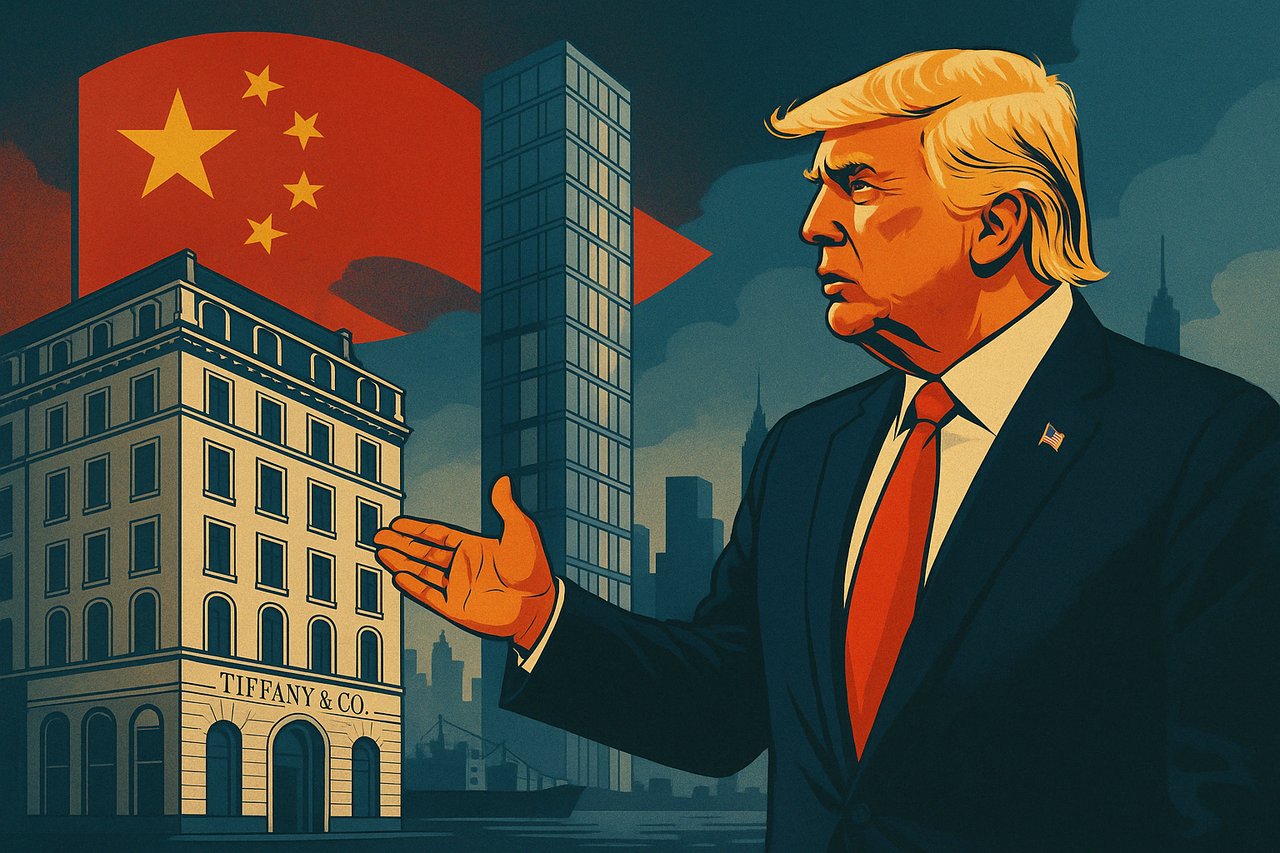
New York is destination one, two, or three for virtually every ultra-high-net-worth family relocating assets out of Greater China. Hudson Yards, Billionaires' Row, and premium new-development condos have absorbed Taiwanese and Hong Kong capital at scale for five years. What makes this theater different is the timeline: this is a structural, decade-long repositioning of generational wealth, not a crisis-driven spike. The pressure campaign alone is sufficient to sustain the inflow. If it goes hot, the inflow becomes a flood.
NYC READ: Hudson Yards, Billionaires' Row, and premium new-development units above $10M are the primary beneficiary of ongoing Greater China capital repositioning. The most durable long-term signal of the five theaters - plan for it as a structural tailwind, with the possibility of a step-change acceleration if geopolitical conditions deteriorate materially.
CASE FILE 05 · SUB-SAHARAN AFRICA · OVERLOOKED / LAGGED
Sudan & the Sahel — The Sleeper Signal ↓ NYC SIGNAL: INDIRECT · 24–36MO LAG
Sudan's civil war and the broader Sahel destabilization- Mali, Niger, Burkina Faso, do not generate real estate headlines. They generate humanitarian headlines, and then they disappear from the financial media cycle. This is precisely why they belong in a framework designed for investors who read ahead of the consensus.
The Sahel sits above significant deposits of gold, uranium, manganese, and rare earth elements. It is also a critical transit corridor for cobalt and other battery-chain materials moving north out of Central Africa. As governance collapses across the region, coups in Mali, Niger, and Burkina Faso in rapid succession, pushing out Western military and mining presence, the vacuum is being filled by Russian Wagner Group involvement, Chinese mining concession acquisition, and Gulf state positioning. The practical effect is a restructuring of who controls the commodity supply chains that feed European and American industrial production.
Rare earth disruption affects electrical systems, HVAC components, and the increasingly electrified building infrastructure that modern NYC development requires. Copper supply disruption feeds directly into construction costs. The effect is not dramatic in any single quarter, it is a slow, structural cost-escalation pressure that compounds over 24–36 months and shows up in NYC construction budgets as a persistent headwind to new supply. Every high-end residential building going up in Hudson Yards or on the Far West Side contains materials that transited through or were priced against African commodity markets. When those markets reprice due to conflict-driven supply disruption, the cost lands in New York two to three years later.
NYC READ: Not a demand signal, a supply suppression signal. Plan for 8–12% construction cost growth over the next 24 months with partial attribution to African supply chain restructuring. The investor who holds existing inventory and avoids new development risk is positioned correctly. The developer who hasn't priced in commodity cost escalation in current pro formas is underestimating exposure.
|
CAPITAL IN MOTION $300B+ Russian sovereign assets frozen post-2022 |
HORMUZ OIL FLOW 20% Of global oil supply through the world's most critical chokepoint |
CONSTRUCTION LAG 24–36mo Commodity shock to NYC pro forma impact |
III
THE SYNTHESIS
What this means for how you position right now
Let's stop being abstract. Five active geopolitical theaters, three transmission channels, and one city that sits at the end of all the pipes. Here is what the intelligence adds up to for a New York City real estate investor in 2026.
The demand-side story is straightforwardly bullish for the top of the market. Global instability concentrates capital in the safest, most liquid hard asset markets on earth. New York is at the top of that list. The buyers moving capital from Eastern Europe, Israel, Greater China, and the Gulf are not flippers. They are generational wealth holders making 20-year decisions. Their arrival creates a demand floor under the luxury segment that is less interest-rate-sensitive, less employment-sensitive, and far less correlated to the Consumer Confidence Index than the upper-middle domestic buyer pool.
The supply-side story is also bullish for holders of existing inventory. Every geopolitical theater analyzed in this piece adds pressure to construction costs. Ukraine adds to energy and materials cost. The Middle East and Hormuz scenario add to energy price floors. The Sahel collapse adds to commodity supply chain costs on a long lag. The cumulative effect is persistent suppression of new development economics, fewer projects pencil out, fewer shovels go in the ground, fewer units come to market.
The Hormuz scenario deserves its own sentence here, because it is categorically different from the others. Every other theater on this list operates through one or two channels with meaningful lags. A Hormuz conflict activates all three channels simultaneously, at full intensity, with almost no lag. It is the only scenario in which the capital flight effect, the supply shock effect, and the macro repricing effect all land on the New York City real estate market in the same quarter. That is not a reason to panic. It is a reason to be positioned before the headline, not after it.
THE STREETCRED THESIS, DISTILLED
Manhattan is not insulated from global conflict. It is the destination of global conflict's consequences. Every time a border moves, an oligarch panics, a chokepoint closes, a supply chain breaks, or a central bank pivots, some portion of that energy resolves into New York City real estate demand or supply dynamics.
The broker who reads geopolitics as noise is leaving intelligence on the table. The investor who understands which conflicts generate capital flight, which create supply shocks, and which reprice the cost of money, that person is not reacting to the market. They are reading it three moves ahead, in the only language that has always mattered: who owns the land.
Wars end. The real estate they create demand for does not depreciate when the peace treaty is signed. Buy accordingly.
"Every military campaign is a real estate transaction conducted at gunpoint. The question for investors is not whether to care - it is whether to care early enough to matter."
IV
HISTORICAL POSTSCRIPT
This is not new. It has always worked this way.
For the skeptic who thinks the geopolitics-to-real-estate connection is speculative, consider the historical record. After World War II, displaced European Jewish capital moved heavily into American urban real estate. New York absorbed an enormous share of that repositioning, the density of that capital in Manhattan real estate is not an accident of culture. It is the record of a capital migration driven by existential geopolitical threat.
After the Iranian Revolution of 1979, Iranian elite wealth, suddenly holding assets in a country that had nationalized their businesses and targeted their class for persecution, moved into American real estate at scale. Much of it landed in New York and Los Angeles. Notably, the Hormuz threat was already embedded in the geopolitical risk premium of that era, and the capital flight it generated did not wait for a formal conflict to materialize. The threat alone was sufficient.
After the 1997 Hong Kong handover, and then again more dramatically after 2020, Chinese capital redrew the ownership map of premium residential real estate in a handful of global cities. New York was always on the list. The building at 432 Park Avenue was financed on the assumption that foreign capital would fill it. That assumption was correct, and the capital was geopolitical in origin.
The pattern is not new. It is not speculative. It is the oldest operating principle in real estate capital markets: political instability elsewhere becomes structural demand here. The architecture of aggression always resolves the same way. Someone, somewhere, ends up owning the land. And for the last hundred years, a disproportionate share of that someone has chosen New York.
Make sure you're ahead of them - not behind them - when the next map gets redrawn.
StreetCred · Real estate intelligence for people who think in decades · © 2026