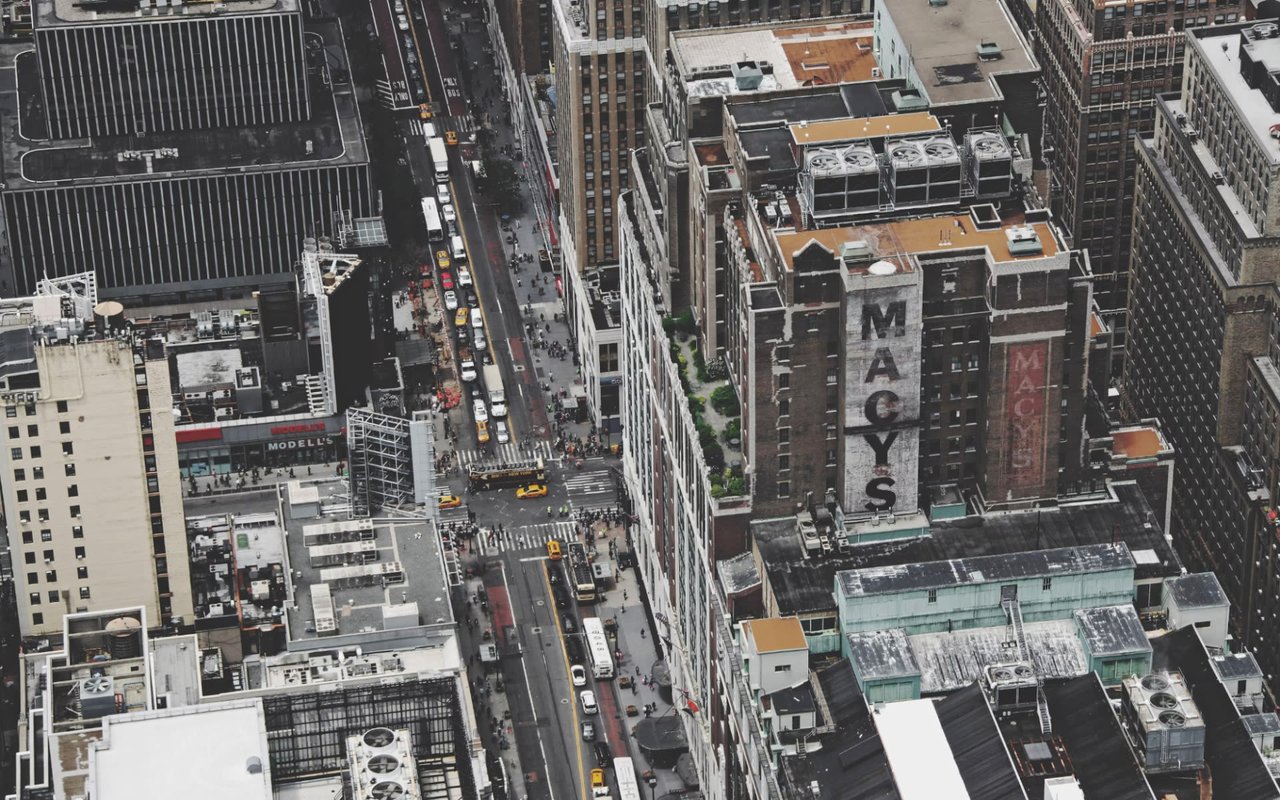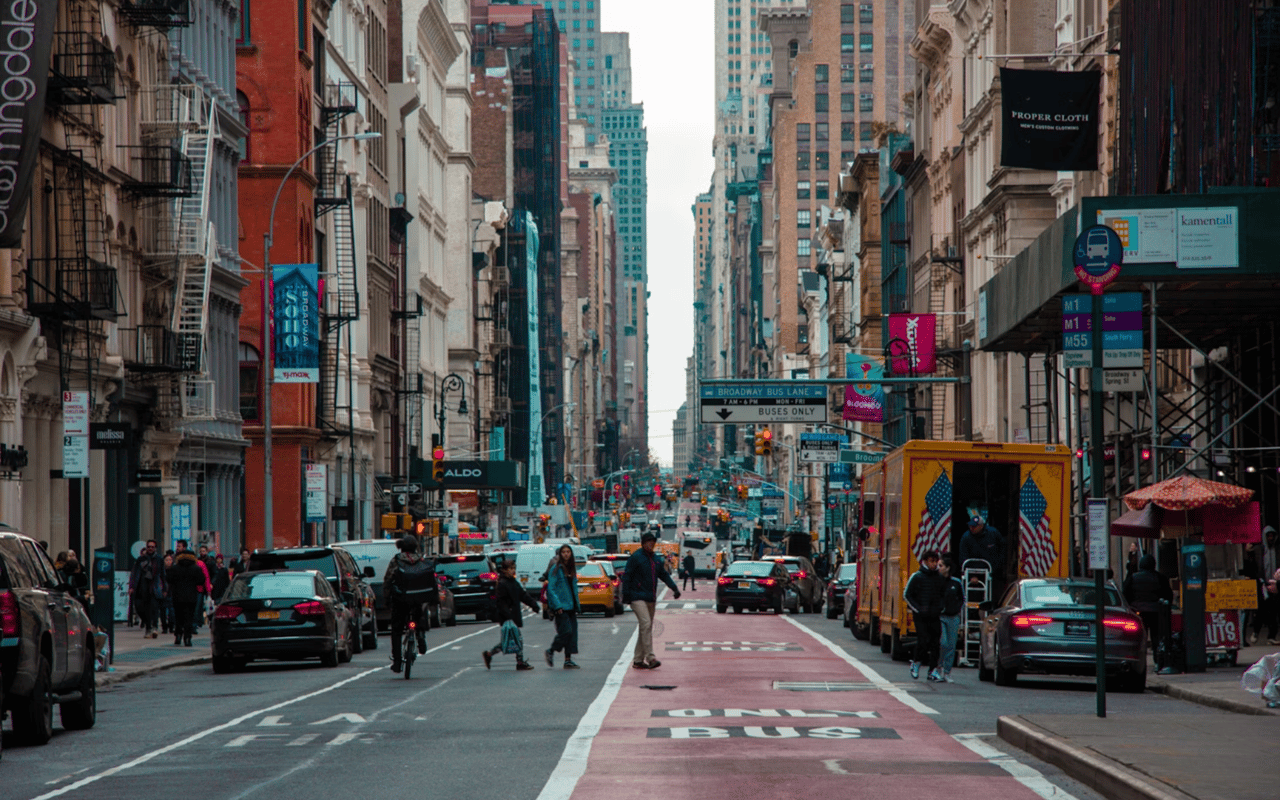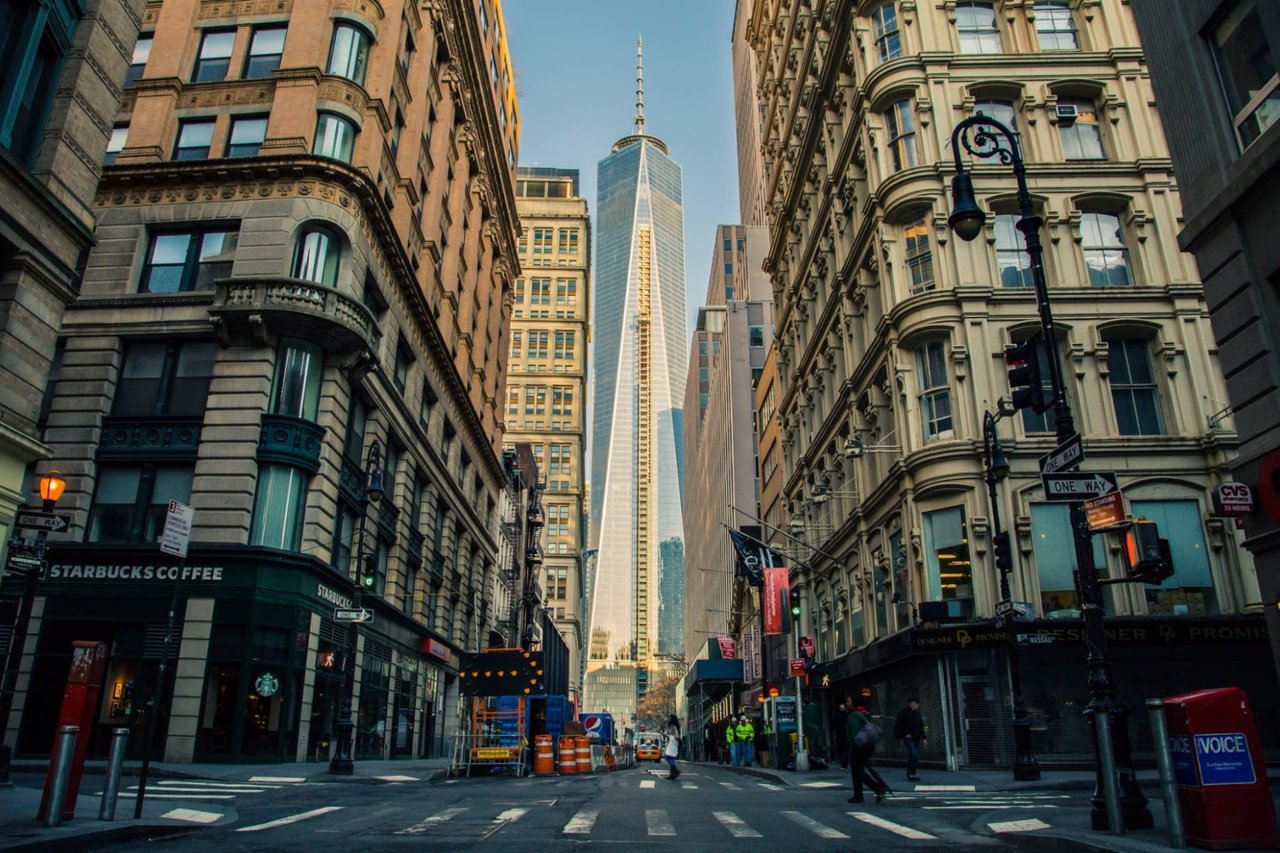
The Canal Street redesign is starting on Tribeca's side of Broadway, and that half was designed for a different job than the other one. In its July 2026 presentation to community boards, the New York City Department of Transportation split the project in two. "Phase 1: Canal Street West and Grand Street" runs from West Street to Broadway and is listed for implementation in fall 2026. Canal East, the Chinatown stretch with the crowded sidewalks and the Walker Street slip lane, is listed for 2027.
In DOT's presentation, the two halves of the street have different problems. West Canal carries the heaviest traffic, while East Canal has more people on foot and more going on at the curb. For the western half, DOT's list of goals reads "maintain vehicle needs" and "solve for extra-wide and complex crossings." So on the Tribeca end, the plan keeps the travel lanes and makes the walk from one curb to the other shorter, simpler, and greener.
The plan before this one
When Broadsheet Daily reported on the proposals in December 2025, the redesign covered the whole corridor at once. Ideas included fewer traffic lanes, pedestrian islands, wider sidewalks, bike lanes, and a possible Walker Street closure, and construction on the first phase was expected to start in July 2026.
The July 2026 presentation changed the order. The eastern blocks, where the Walker Street closure and the "super sidewalk" ideas were proposed, are now a separate Phase 2. The presentation describes long crossings, crowded sidewalks and underused painted space at Walker Street. DOT says it is still studying curb use there and working with City Hall, elected officials, and other agencies on how to handle vending. It also says outright that "Canal St East can happen independently of Canal St West."
The same plan dropped the idea of a bike lane on most of Canal. Cyclists going crosstown would use a two-way protected lane on Grand Street and rejoin Canal at its quieter western end near Varick Street. Streetsblog reported that DOT's Manhattan borough commissioner pointed to space and traffic constraints on Canal, which has six lanes for moving and parked cars.
Corner by corner, west to east
Here is what DOT's Phase 1 drawings show, from the river to Broadway:
- West Street to Hudson Street. New crosswalks at Washington Street, which has none today. Concrete islands on Watts Street. More daylighting, meaning clear sightlines at intersections. A concrete tip and new pedestrian space at Canal Park. A loading zone between Washington and Greenwich Streets. A concrete island with plantings and seating. New crossings over West Street/Route 9A toward Hudson River Park are labeled for 2027.
- Hudson Street to Sixth Avenue. The neckdown at Hudson Street stays and the slip lane there closes, which adds pedestrian space. The curb moves and a concrete island goes in at Albert Capsouto Park. New concrete curb extensions and islands shorten the crossings, and a new southbound protected bike connection is added. A protected bike lane on part of this stretch is marked "pending feasibility, to be presented at future date."
- Canal Street at Sixth Avenue. Concrete curb extensions and islands, a new concrete bus-boarding island, and a two-way bike lane linking the new Grand Street lanes to the existing Sixth Avenue lane. One curb relocation here depends on a feasibility study.
- Sixth Avenue to Broadway. A new crosswalk at West Broadway and Sixth Avenue and painted curb extensions for shorter crossings. One segment is marked for a "future closure and reversal, pending further coordination."
Outside those four segments, the presentation adds curb extensions at Holland Tunnel Exit 2 and Watts Street.
Almost every item on that list does one of two things. It either makes a crossing shorter or uses space that is now just painted roadway. The presentation calls a lot of today's painted space on the western blocks "underutilized." None of the four segments removes a travel lane.
The turn bans are the change drivers will notice
The biggest change for anyone driving through Tribeca is on a separate slide. DOT proposes banning left turns at Greene Street and West Broadway. New signs would send northbound local traffic onto other routes, and DOT says its traffic models "forecast acceptable levels of service with rerouted volumes" and that it "will continue to monitor and adjust as needed."
Community Board 1 asked for this too. In its July response, summarized by Tribeca Citizen, the board asked DOT to consider no left turns off Canal onto West Broadway or Greene.
DOT's traffic data explains why the lanes stay. About 17% of vehicles on Canal are using it to get between the Holland Tunnel and the Brooklyn bridges. Most of the rest are going to or from somewhere in Manhattan. DOT took those counts before congestion pricing and then counted again at key locations after it started. Streetsblog reported that congestion pricing cut demand on Canal by about one-fifth. That still leaves a lot of traffic on the Tribeca blocks, so DOT is managing the turns instead of taking lanes away.
Planters, granite, and who looks after them
At the neckdowns, a row of planters will be a common sight. DOT's plan calls for about 60 two-foot-square concrete planters alternating with about 60 granite blocks to protect pedestrians. The presentation says HORT will install and maintain them, and that HORT and local partners will support planting maintenance along Canal. The slide sums up public feedback in one line: "Canal needs more greenery."
That line ties into the earlier debate. Broadsheet Daily reported that the Tribeca North Neighborhood Association criticized the 2025 proposal as not going far enough. The group pushed for planted center medians and wider sidewalks, not a bike lane on Canal. Phase 1 doesn't add medians, but planters and planted islands are a partial answer.
Where the boards and DOT disagree
The two community boards around the Tribeca end took different positions. CB1's July response welcomed the safety improvements but listed requests, as summarized by Tribeca Citizen: make the changes permanent, deal with vending that blocks sidewalks and storefronts, add cues for people with disabilities at every intersection, look at left-turn restrictions at West Broadway and Greene, and consider a two-way bike path on Spring Street. The same summary notes separate plans for Church Street between White and Canal, some of them already in place, and says the board asked for an update.
CB2 pushed back harder on the bike route. According to Streetsblog, its full board passed a non-binding resolution in late October opposing the eight-foot two-way Grand Street lane, which works out to four feet per direction, and asked DOT to study putting the bikeway on Canal instead. DOT's reply, as Streetsblog reported it:
"We are moving forward with our current plan for the corridors because New Yorkers cannot afford yet another delay to the Canal Street redesign."
From the Chinatown end, Streetsblog reported in July that Chinatown Partnership director Wellington Chen argued the more dangerous eastern stretch should be fixed first, and worried that opposition could leave it without improvements. Phasing the project means the Tribeca blocks get their changes before those eastern blocks do.
The season's timeline
DOT has given targets in two places. The July presentation lists implementation of Canal West and Grand Street for fall 2026. At the CB2 committee meeting in late October, Streetsblog quoted Manhattan Borough Commissioner Danielle Zuckerman saying DOT was "implementing a segment of Grand Street this year, as well as a segment of Canal that includes some of the pedestrian spaces and curb extensions," and hoped "to get both of these things in by the end of the season." On Grand Street, DOT plans to finish the Varick-to-Centre segment by the end of the year and the remaining six blocks to Chrystie Street in 2027.
The curb rules will matter to anyone who gets deliveries or uses car services along Canal. DOT's curb-regulation slides use two signs with different meanings. "No Standing" lets drivers pick up and drop off passengers but not load or unload packages or merchandise. "No Parking" allows both. The new loading zone between Washington and Greenwich is the one curb change on the westernmost blocks that is set aside for deliveries. Signage is the final word, so check what's actually posted.
When curbs move and turns get banned, a building's daily routine changes too: where the moving truck parks, how deliveries reach the door, which way a car service comes in. If you own near Canal, or are weighing a building along it, and want to talk through how these changes affect a particular address, Kobi Lahav is glad to go over it with you.